top of page
All Projects


Insects as Educational Models
Publication, Pedagogy
Entomologists are often seen as insect fanatics, well-versed in trivial facts about myriad “creepy crawlies.” However, as an educator, the true obsession lies in the dynamic role insects play in the classroom. Their value as instructional models relies on two biologically significant characteristics: they are ubiquitous, and they are extremely diverse.

Engaging Students as Scientists
Publication, K-12
There is a growing need for classroom materials that position students as agents of scientific discovery—designing investigations, collecting data, and drawing conclusions based on experimental evidence. Our project, MothEd, was founded to create a place-based, student-oriented, moth-themed unit that supports authentic student agency and scientific inquiry. Developed materials were assembled into a comprehensive teacher guide that introduces educators to the curriculum and supports them in implementing student-led research projects in their classrooms. Students are supported in asking testable research questions, making predictions, building low-cost do-it-yourself moth traps, collecting specimens, drawing empirically based conclusions, and sharing their findings with invested audiences. While the MothEd Teacher Guide can be implemented across the K–12 spectrum, it was specifically designed for middle school grades and is freely available for use. Teachers who have implemented the curriculum report greater student engagement, student ownership of learning, and connections that students make to authentic scientific practices.

Bumble Pinning Guide
3D Model, Pinning Guide
The next wave of insect pinning tools! Use this guide to learn how to pin bees! This six part print can be assembled to create a bee with rotating wings. A hole through the thorax and in each wing allows this 3D printed figure to be used for learning to pin bees (the easy way), specifically positioning the wings correctly. Doubles as a cute little fidget!

Darner Pinning Guide
3D Model, Pinning Guide
The next wave of insect pinning tools! Use this guide to learn how to pin dragonflies! This six part print can be assembled to create a dragonfly with rotating wings. A hole through the thorax and in each wing allows this 3D printed figure to be used for learning to pin dragonflies, specifically positioning the wings correctly. Doubles as a cute little fidget!

Insect collecting with K-12 aged students
Publication, K-12
Insects have long been integral to youth science education both in K-12 classrooms and in informal learning contexts due to their diversity, accessibility, and ecological importance. Collecting and studying insects helps students develop key scientific skills such as observation, classification, and inquiry. However, with the rise of conservation movements and ethical considerations regarding animal rights, the practice of insect collecting has come under scrutiny. This paper explores the practice of insect collecting with students in the K-12 age range, highlighting both its educational benefits and the ethical challenges it poses. We examine arguments both for and against insect collecting and propose a framework from which teachers, students, and informal educators can construct their own code of ethics. The goal is to foster ethical, inquiry-based learning while ensuring respect for nature and promoting a nuanced understanding of environmental stewardship.

Assessing the Performance of a 3D Printed Pennsylvania-Style Black Light Moth Trap
Publication, 3D Printed
Passive light traps have long been a popular method used for trapping moths and other night-flying insects. Recent changes in the availability of equipment necessitate the development of accessible and effective alternatives for insect monitoring. This study assesses the performance of a 3D-printed Pennsylvania-style black light moth trap compared to the formerly available commercial BioQuip trap and investigates the impact of funnel size on catch rates. Our 3D-printed trap was compared to the BioQuip trap over ten trap-nights in Central Michigan. Results indicate that commercial BioQuip traps consistently captured significantly more moths than the 3D-printed prototype. An additional experiment evaluating the effect of funnel diameters on trap performance revealed that larger funnels generally caught a greater number of moths. While the commercial trap outperformed the initial 3D-printed design, likely due to differences in light source and funnel size, the 3D-printed trap offers a viable, cost-effective, and reproducible alternative. This technology enhances accessibility for citizen scientists, educational programs, and smaller research labs, promoting widespread moth monitoring crucial for addressing global insect declines. Future research should focus on optimizing LED light sources and trap geometry to further close the performance gap.



Modeling Inheritance in Insects
Lesson Plan, Higher Ed
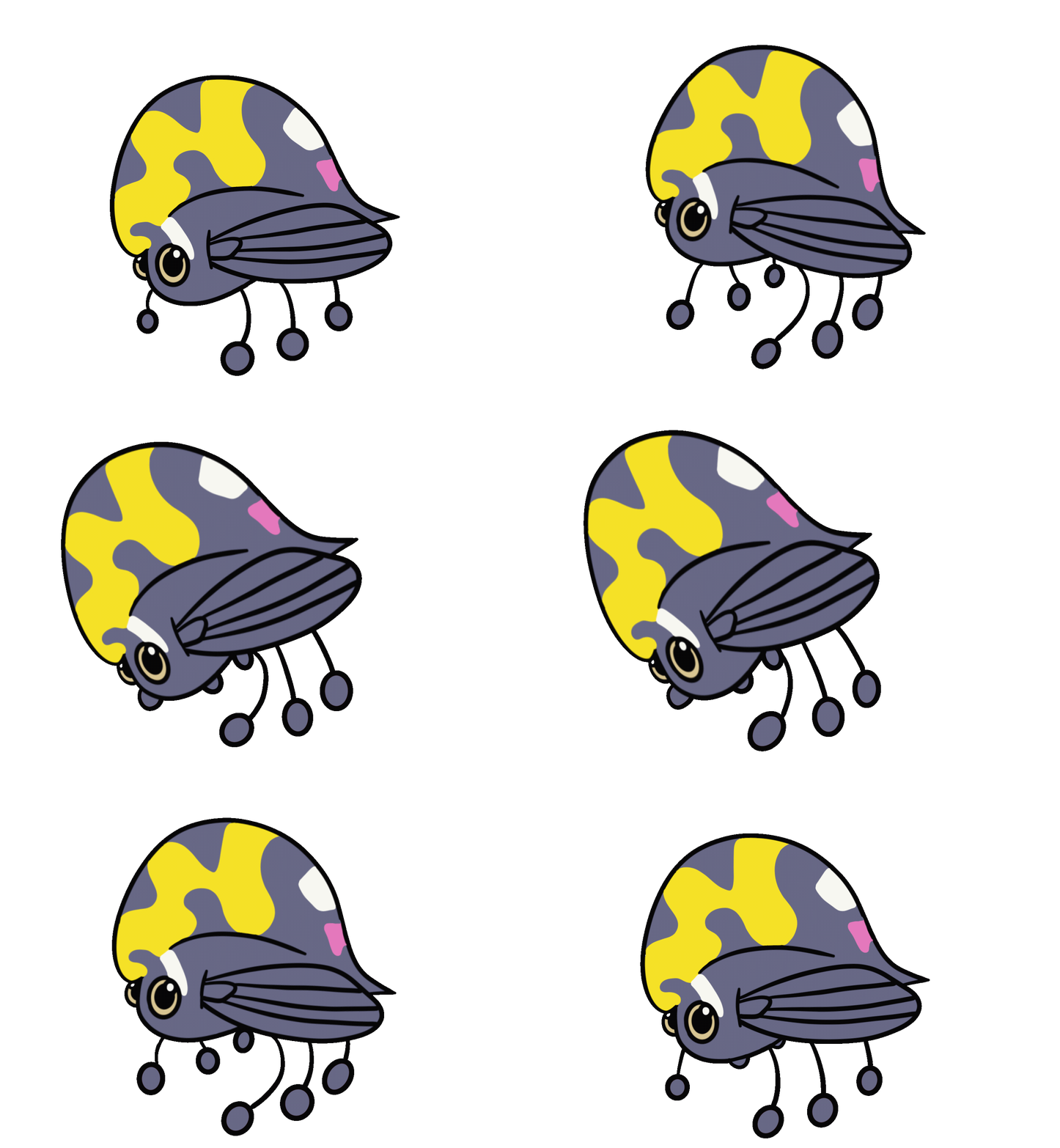
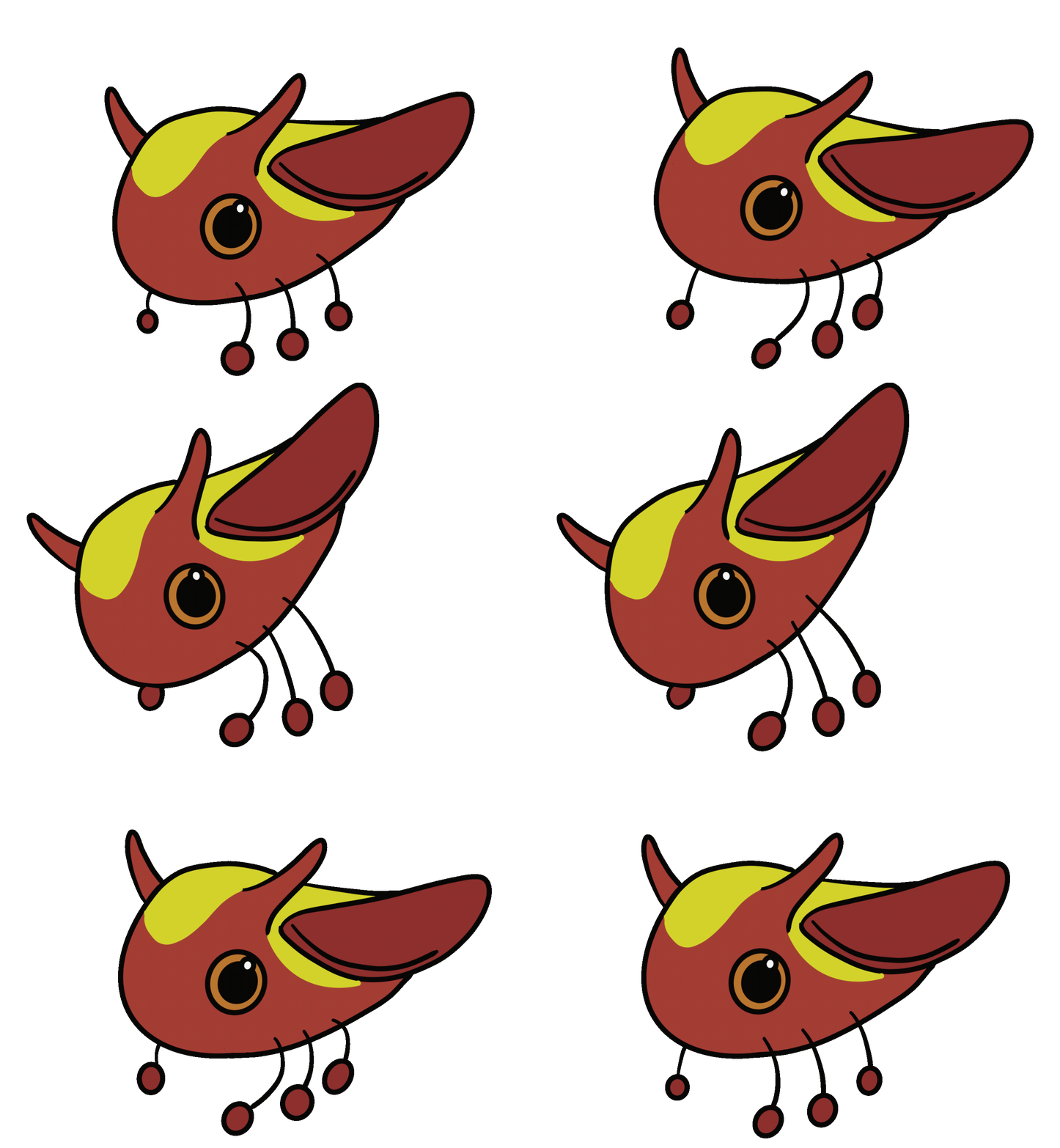
In this activity, students learn the fundamentals of Mendelian inheritance through concrete, insect-based examples. Moving from molecular foundations (DNA > gene > trait) to monohybrid Punnett square models, students investigate how alleles separate and recombine during reproduction.

Insect Orders Crossword
Lesson Plan, Higher Ed
This interactive, hands-on tabletop practicum was designed for an introductory entomology unit on insect diversity, taxonomy, and anatomical adaptations. Blending multi-modal specimen observation with an active crossword challenge, the activity served as both a collaborative learning exercise and the day's formative exit ticket.

Anatomically Correct Insects
Lesson Plan, Higher Ed
In this introductory entomology activity, students move past the generic "bug" label to explore the definitive morphological structures that distinguish true insects from other arthropods. Through interactive comparative slides featuring Lepidoptera, Coleoptera, and social insects, learners dissect external morphology: the three primary tagmata (head, thorax, and abdomen), flight structures (forewings and hindwings attached strictly to the thorax), sensory organs (compound eyes, antennae), respiratory spiracles, and specialized mouthparts (proboscis vs. mandibles).

Blacklight Insect Trap
3D Model, Tool
This four-part design mimics the pennsylvania-style blacklight traps previously available from Bioquip. This design includes a top (B) and base (C) that can be glued together, these conssite of a flat cover to prevent rain, panes for insects to collide into, a funnel for insects to fall through, and the upper portion of the container. The bottom (D) is removable, with built in drain, that can be secured with twist ties or tape. The core (A) is the final piece which is designed for a blacklight LED light strip with a notch for the USB cord to exit when seated on top.
Large Yellow Underwing Moth (Noctua pronuba)
Graphic
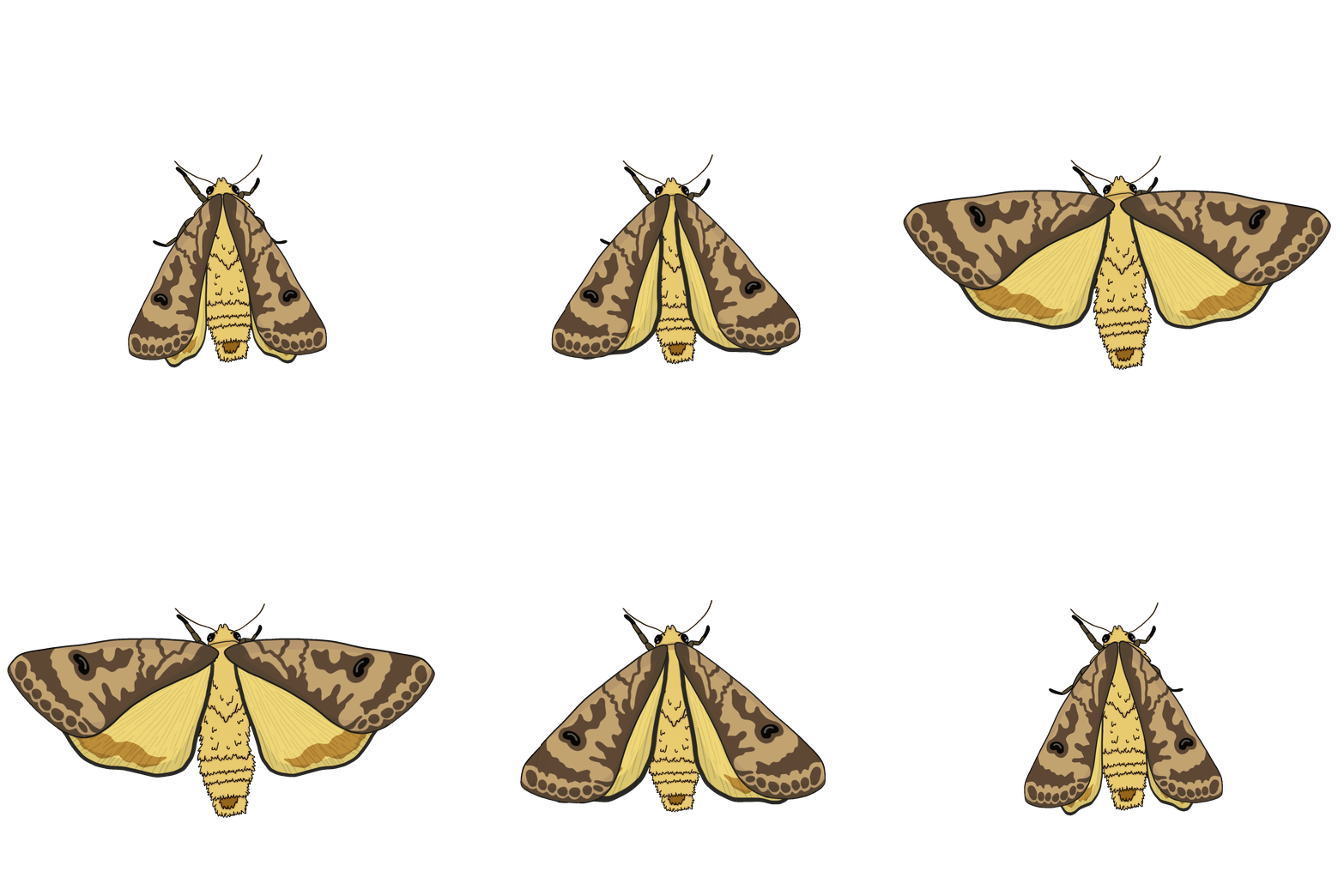
This illustration depicts the defensive sequence of the large yellow underwing moth (Noctua pronuba). At rest, the moth relies on cryptic forewings for camouflage against tree bark. When disturbed by a predator, it quickly spreads its wings to expose bright yellow-orange hindwings, using a sudden flash of color to startle the threat and facilitate escape.

Moth Pinning Guide
Graphic
This instructional figure illustrates the sequential process for pinning and spreading an adult moth specimen for entomological preservation using a four-pin method instead of traditional paper methods. these images depict correct alignment of the forewings and hindwings and is the preferred pinning strategy when working with young scientists.
Swallowtail Caterpillar Osmeterium
Graphic, GIF
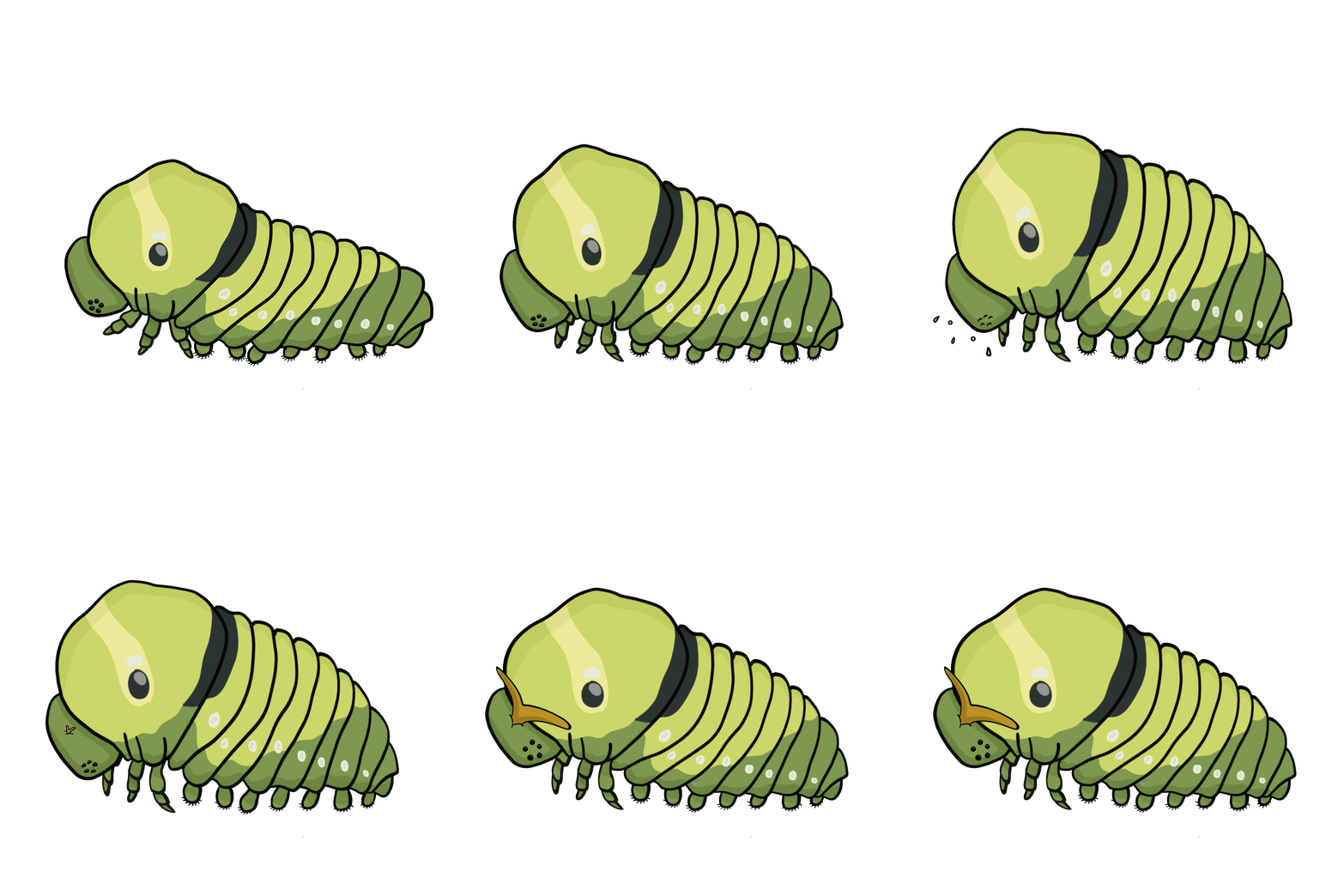
This frame-by-frame animation illustrates the defensive response of a swallowtail caterpillar (Papilio spp.). When threatened, the caterpillar everts its osmeterium, a Y-shaped glandular organ located behind the head, using fluid pressure. The bright coloration and release of pungent chemical compounds serve to startle and deter potential predators.

Mini Moth Pinning Guide
3D Model, Pinning Guide
Similar to my other Moth Pinning Guide, only Mini! Use this guide to learn how to pin moths and butterflies! This six part print can be assembled to create a moth with rotating wings. A hole through the thorax and in each wing allows this 3D printed figure to be used for learning to pin moths and butterflies, specifically positioning the wings correctly. Doubles as a cute little fidget!

Entomologists in the K-12 Classroom
Publication, K-12
Entomologists, like many other types of scientists, will often share their scientific findings with the public. This is especially true for entomologists, who engage specific audiences, such as extension programs that target farmers, for example. But those focusing on K-12 classrooms are less well studied. Here, we conducted a scoping review to search for all relevant publications, and from those determine (1) the characteristics of K-12 entomology outreach efforts and (2) opportunities for improvement based on identified characteristics. The search of five databases yielded 42 relevant publications. Analysis of those publications identified the following characteristics of K-12 outreach efforts: These publications are most often published in educational journals, they are most often reflective, and they rarely evaluate the interventions employed. We suggest that the practice of K-12 entomology outreach benefits from (i) publishing in entomology-focused journals, (ii) including non-academic authors, (iii) evaluating interventions, (iv) including student data, and (v) considering elements of diversity and inclusion.


Moth Pinning Guide
3D Model, Pinning Guide
Use this guide to learn how to pin moths and butterflies! This six part print can be assembled to create a moth with rotating wings. A hole through the thorax and in each wing allows this 3D printed figure to be used for learning to pin moths and butterflies, specifically positioning the wings correctly. Doubles as a cute little fidget!


Conducting Authentic Moth Research
Publication, K-12
Studying moths is an excellent way to include students in science practices by introducing them to a ubiquitous but under-appreciated animal group that can be found in their local places, including urban, suburban, agricultural, forested, and other habitats. In this paper, we share a simple, low-cost method that can allow individual students or groups to collect moth specimens and begin to ask and answer questions about moth diversity and abundance in their local community.

Pollinator Memory
Lesson Plan, Outreach Activity
What would our plates look like without insect pollinators? In this active, gamified outreach lesson, participants experience firsthand how everyday foods depend on insect biodiversity. Teams begin with an unfulfilling "pollinator-free" meal—just the top and bottom of a wheat hamburger bun, representing wind-pollinated grains. To build out a full picnic plate (a complete cheeseburger, potato chips, watermelon, and brownies), participants play a giant memory-matching game to discover the specific, often surprising insects responsible for each ingredient.

Unless explicitly stated, any provided resource is copyrighted under a Creative Commons Attribution-NonCommercial-ShareAlike 4.0 International License. Under this liscense you are encouraged to use, share, adapt, and build upon the materials as long as appropriate credit is given to the listed authors, the material is not used for commercial purposes, and if you transform or remix these materials you distribute your contributions under the same licsense.
bottom of page